
Lakeland Mold Remediation
Certified Structural Drying & Mold Removal
Our technicians bring years of focused remediation experience to residential properties dealing with persistent moisture intrusion.
Our comprehensive emergency water damage restoration services stabilize affected framing before structural rot takes hold.
In this subtropical climate, sustained indoor relative humidity above 60% allows dormant mold spores on drywall and wood framing to colonize in as little as 24 to 48 hours.
Across our immediate service territory, 52,137 housing units on record in the Census ACS 5-year estimates face these exact moisture vulnerabilities.
Homeowners often describe air conditioner condensate line clogs that flood attic overflow pans, soaking ceiling insulation and creating sagging drywall.
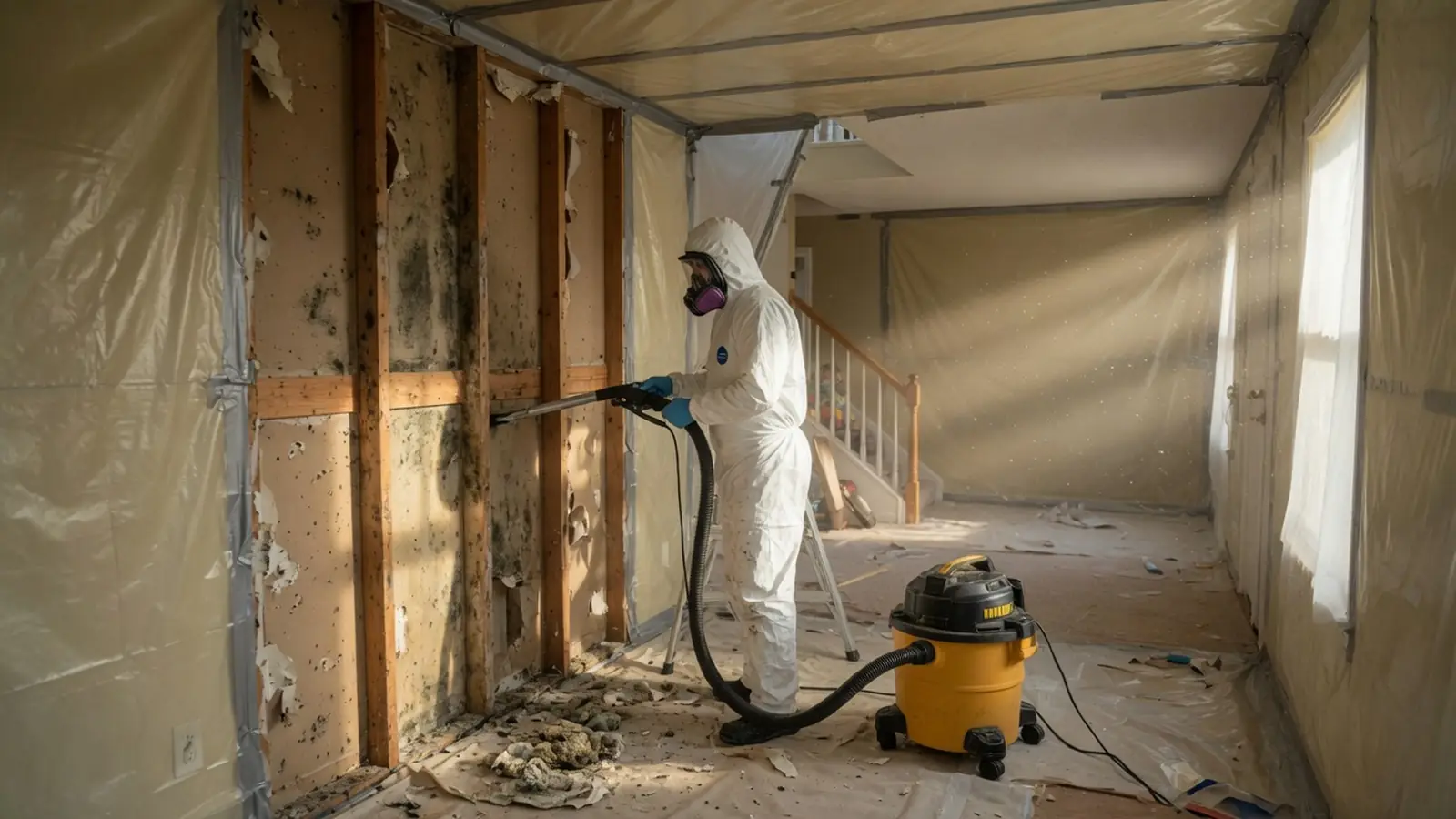
We deploy commercial HEPA filtration units and hospital-grade containment barriers to isolate microscopic contamination during every extraction.
Each project concludes with independent environmental testing to verify that your indoor air quality is fully restored.
Our Proven Four-Step Remediation Process
Professional flood cleanup protocols for residential properties ensure that moisture trapped behind baseboards is thoroughly eliminated.
As trade restoration videos frequently emphasize, Florida's heat and humidity trigger toxic mold colonization within 24 to 48 hours if contaminated floodwater is not extracted immediately.
- Thorough Moisture Mapping. Technicians calibrate infrared thermal imaging cameras and penetrating moisture meters to locate damp building cavities behind finished drywall. Identifying hidden pockets of water intrusion early prevents fungal colonies from spreading undetected into structural studs.
- Negative Air Containment. Remediation crews erect sealed polyethylene containment barriers under negative air pressure with HEPA filtration to prevent disturbed spores from spreading into unaffected living spaces. A pattern echoed in public discussions is that outdoor floodwater carries sewage and chemicals, making wicked drywall, insulation, and carpet padding unsalvageable; they must be cut out rather than dried.
- Material Removal & Antimicrobial Treatment. Crews physically strip out water-compromised drywall, acoustic tiles, and insulation before mechanically cleaning the exposed structural timber. Technicians apply EPA-registered antimicrobial solutions to all exposed framing to neutralize residual fungal roots.
- Independent Clearance Verification. Following active dehumidification, third-party indoor air specialists collect microscopic air and surface samples inside the containment zone. You receive official documentation proving ambient spore counts have returned to normal baseline levels.
Certified Containment & Environmental Standards
When severe storm damage compromises building envelopes, our containment standards keep indoor environments secure.
We strictly adhere to IICRC S520 guidelines, maintaining negative air pressure differentials until microscopic air testing confirms safe habitability.
Drywall Tearout & Root Removal
Surface antimicrobial spraying alone fails on colonized drywall, requiring physical removal of root-penetrated materials followed by third-party post-remediation clearance testing. Our crews bag contaminated wallboard inside containment zones to prevent airborne spore circulation throughout living quarters.
Attic & Crawlspace Remediation
Leaking roof decking and clogged air conditioner drain pans routinely deposit standing water into hidden upper cavities. We remove soaked fiberglass insulation, treat timber framing with specialized sealants, and dry out structural trusses.
HEPA Air Scrubbing & Dehumidification
Industrial desiccant dehumidifiers extract ambient vapor while continuous HEPA filtration scrubs microscopic particulate from indoor air. We monitor drying logs daily to ensure ambient relative humidity drops below 50 percent.
Dedicated Remediation And Environmental Care
Our technicians follow rigorous containment protocols on every project, maintaining negative air pressure and proper HEPA filtration to safeguard your household.
- 12Zip Codes Served
- 6Service Areas
- 3Services Offered
Homeowners rely on our remediation technicians to contain severe fungal growth and restore safe indoor air quality following major moisture events.
“A previous contractor simply sprayed chemical cleaner over the mildewed drywall and walked away, which did nothing to stop the smell. The crew came in, stripped out the compromised materials safely, and set up air scrubbers that cleared the air completely. They fixed another company's careless mess and gave us total peace of mind.”
Marcus T.
“Every single cost was itemized clearly on the initial estimate before anyone touched our property. There were zero surprise fees or tacked-on line items at the conclusion of the job. You rarely see this level of financial transparency from home service professionals.”
Brenda K.
“At the end of each afternoon, the technicians vacuumed the containment zone, hauled away debris bins, and sealed off the work hallway securely. Our family could still live comfortably in the rest of the house without tripping over extension cords or breathing dust. Their respect for our living space was outstanding.”
Derrick H.
“Detailed photo updates arrived via text message every morning showing moisture meter readings and structural progress. We never once had to chase anyone down for an update on our clearance tests. Working with them made a stressful situation feel completely manageable.”
Elena V.
Frequently Asked Questions
How quickly does mold spread after water intrusion in local homes?
Indoor mold spores colonize damp drywall and wood framing within 24 to 48 hours whenever relative humidity levels remain above 60 percent. Subtropical heat accelerates fungal growth across porous ceiling tiles and baseboards, making rapid extraction and structural drying essential.
Can moldy drywall be saved with chemical sprays instead of removal?
Drywall colonized by fungal hyphae cannot be salvaged by surface sprays alone and must be physically cut away under negative air containment. Antimicrobial treatments sanitize framing timbers, but porous sheetrock holds deep fungal roots that will re-emerge once moisture returns.
How long does professional mold remediation typically take?
Standard containment, material tearout, structural drying, and final environmental clearance testing typically require three to five days. Air scrubbers run continuously throughout the cycle until independent laboratory testing verifies that indoor spore counts match outdoor baselines.
What factors determine the overall cost of residential remediation?
Remediation expenses depend on the square footage of contamination, necessary drywall removal, equipment duration, and clearance testing fees. Contained small bathroom leaks cost significantly less to resolve than whole-house water events resulting from attic drain pan overflows or storms.
Why is third-party clearance testing necessary after cleanup?
Independent third-party air sampling provides unbiased documentation that ambient fungal spore concentrations have returned to normal levels. Having an unrelated certified environmental inspector perform post-remediation testing ensures your living spaces are genuinely safe for reoccupancy.